
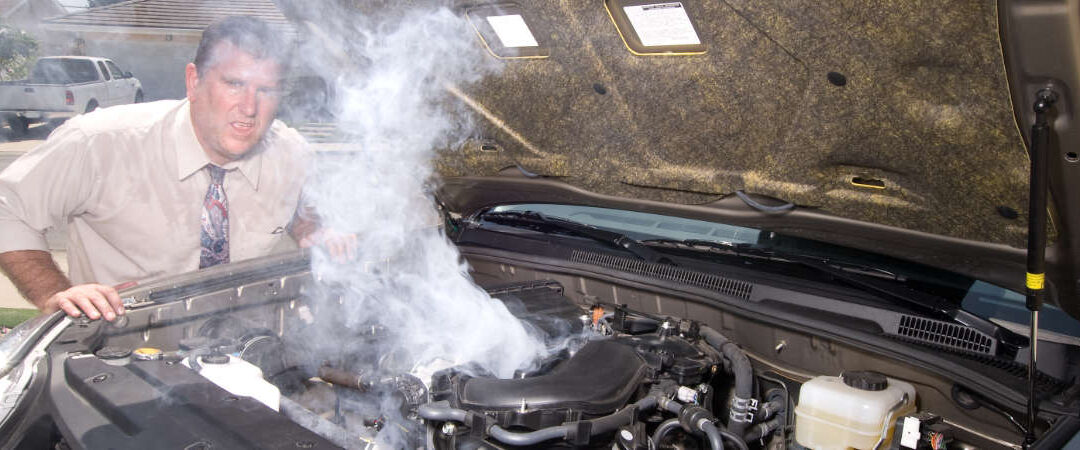
Engine Smoke
One moment you’re pootling along to the shops in your trusty vehicle, then the next there’s smoke pouring from the engine. How? What happened? What should you do?
There are many reasons for smoke coming from your car. Never ignore it; pull over when it is safe to do so and turn the engine off immediately.
First of all, see where the smoke is coming from, what colour it is, and think about when it appeared whilst you were driving.
Could it be the least worrying option – simply water vapour that’s condensing on a cold day?
Let’s go through the reasons for engine smoke…
Fire
As soon as you spot a fire, don’t try to find out what’s causing it – pull over, open the bonnet using the lever, but do not prop it up, ensure everyone is out of the car, and dial 999.
Overheating
Overheating can be triggered by several faults, such as faulty wire casings, heated residues on the engine block, and overheated liquids including oil, transmission fluid and brake fluid. Your coolant system may have a fault, or the engine could be short on lubricant. Get a trustworthy garage to take a look and solve the problem for you.
The colour of the smoke can help identify the problem. Here, we will look at the options.
Black smoke from the engine
Black smoke leaving your engine is often a sign that too much fuel is being burned. It could also be caused by a clogged air filter. If you catch either fault early, they are usually easy to fix.
- Faulty fuel injector
Fuel injectors send fuel into the engine as a high-pressure mist. If there is a leak, or wear and tear to the seals, then dirt and fuel can create clogging, and therefore will need to be replaced by a qualified mechanic.
- Damaged fuel pressure regulator
This part of the engine regulates how much fuel is being fed into the car. This part sits partly on the inside of the engine and partly on the outside. Depending on where the fault is will contribute to how much the repair will be.
- Carburettor
Carburettors tend to be found in older cars and are used to mix air and fuel. You will spot dark smoke from the engine if this part fails to mix correctly.
- Blocked inlet manifold
Smoke will appear if a blockage reduces the amount of fuel and air to the cylinders in the engine.
- Ignition timing is off
For fuel to burn correctly, fuel needs to ignite at just the right time during the combustion cycle. If the timing is off, your engine will burn excess fuel and can create smoke.
White smoke from the engine
The most common cause for white smoke is a coolant leak, but there are other reasons also…
- Damaged coolant/radiator hoses
You may be able to spot this problem yourself under the bonnet, as the hoses (if broken) will be swollen and cracked.
- Cracked engine block
An engine block is like the skeleton of your engine as it holds all the major parts of your engine together. This isn’t very common in this country, as it needs to be very VERY cold! Very low temperatures can freeze coolant and push against the walls of the block, creating small cracks, which must be repaired by a qualified mechanic.
Black smoke from the exhaust
Don’t be worried if you spot a puff of black smoke from the exhaust when you start up the engine but do get it checked out if it continues to smoke whilst driving. It’s possible continuous black smoke from the exhaust is due to one of these reasons –
- Dirty or clogged air filter
If your filter isn’t working as it should, then dirt and debris can get to the combustion engine, which will be burned with the fuel and appear as black from your exhaust.
- Poor fuel pressure regulator
This piece of equipment maintains pressure in the fuel system. If it’s faulty, then the pressure can increase and give out extra fuel unnecessarily which will create black smoke from the exhaust.
- Leaking or clogged fuel injector
If your car shakes when it’s not being used, your fuel injector may need to be replaced.
They will give out too much fuel, which, as mentioned before, gives out black smoke.
White smoke from the exhaust
If white smoke appears when you start the engine and then quickly disappears, it’s likely due to condensation built up than anything serious. But if it continues, then it could be coolant that’s leaked into the combustion chamber, which can happen in three different ways:
- Blown head gasket
This tends to happen as a result of an overheated engine. Have a look at the underside of your oil filler cap. If you can see oil mixing with water in your engine, there will be a thick, light-brown residue on it. It’s not cheap to repair a head gasket, so be prepared to pay up to £1,000 for the job.
- Cracked engine block
This could spell the end of your car, as the job itself is almost impossible and very expensive.
- Damaged cylinder heads
These parts can become warped due to overheating. Coolant can slip through the damaged seals and burn off as white smoke.
Blue and/or grey smoke from the exhaust
Your car is burning oil if grey smoke is coming out of your exhaust. Reasons for oil leaking are…
- Damaged valve stem seal
Valve stem seals lubricate the valve in combustion engines to help maintain the correct ratio of fuel and air. If any of these parts become loose, then the seal is lost, and oil can leak.
- Failed pistons and piston rings
When accelerating, bluey-grey smoke will escape from your exhaust if your piston rings are worn or damaged.
- Faulty PCV valve
If the Positive Crankcase Ventilation (PVC) valve gets stuck, it mixes oil, air and other gases inside the engine. When it burns, it will cause blue smoke.
- Worn engine oil seals
A number of seals are used within an engine to stop oil from leaking to areas of the car. If any of these wear or tear, the oil will be burned off and blue smoke shall be visible.
- Inlet manifold leaks
If the manifold leaks oil into the cylinders, you may see blue smoke as a result of the oil burning off.
- Head gasket failure
As mentioned before, a failed head gasket can be expensive to repair. If a faulty head gasket leaks oil, then it will burn off into blue smoke.
Car smoking but not overheating
If your car is smoking without the engine overheating, it’s usually due to a minor fault that can be easily fixed.
- Spilled oil when filling up the engine oil.
- Oil leak from faulty areas which contain or transport oil around the engine
- Faulty wires
- Leaking coolant – the coolant overflow tank can leak fluid which burns off as steam.
We recommend you always look into any smoking, large or small, the moment you first spot it. We are on hand to repair any problems you have with your vehicle, get in touch and one of our experienced mechanics will be happy to help.