
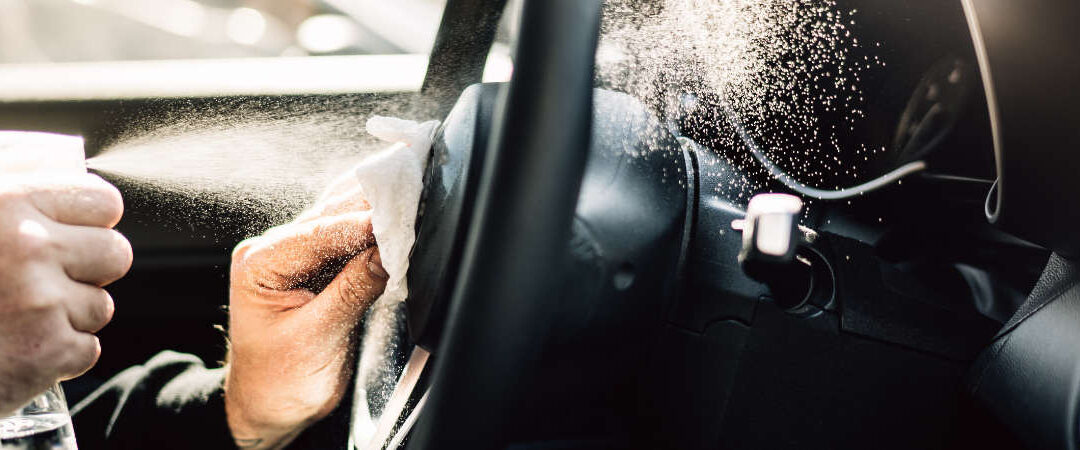
Helping to reduce the spread of Covid, starting with your vehicle.
We stayed at home for weeks, we worked from home/didn’t work at all, we played in our gardens and barely used our cars. And now finally many are back on the roads; for business, commuting, school runs, food shopping, or dare we even risk it – a nice (socially distanced) day out with friends or family.
Where would we be without our cars, hey?! Especially now with the Covid pandemic, the thought of using public transport isn’t a desirable one. But there are still risks attached with private transport which we all need to be aware of.
We’ve put together a list of safety checks for your car to help it be as Covid safe as possible.
Car share.
For the environmental impact, car sharing has been highly recommended over the years. But during a pandemic, we’ve been advised by the Government to limit our contact with other people as much as possible. What’s the solution? What if you are a taxi driver, driving instructor, offering a lift -to a family member who has a disability, or simply want to stick to the car share scheme? The list goes on. Let’s face it, people will always need to share a car for several reasons.
First things first. Ensure your passenger isn’t showing any symptoms of the virus; temperature, persistent dry cough and/or loss or change of taste and/or smell. If they are, then they must immediately self-isolate and arrange to have a Coronavirus test taken. (for more information, visit www.gov.uk/get-coronavirus-test )
Before they get in the car, ensure you are all wearing face masks. Offer to open the car door for them, as this is one less area for a bug to sit on.
Clean your car
This goes a bit further than just taking out the empty crisp packets off the back seat! We are talking about the dirt that you can’t see. Take special care when cleaning car interiors, as certain products you may use around the home can damage the upholstery. We don’t advise that you use products containing bleach, ammonium, or hydrogen peroxide.
Just like your hands; warm, soapy water will do the trick to rid any traces of the virus. Think about the most touched areas of the car (you then start to realise that is probably most of the car anyway!) Pay special attention to interior door handles, window controls, gear stick, radio controls, armrests, sun visors, steering wheel, indicators and wiper controls, and the handbrake.
Also, ensure the hotspots of the exterior are thoroughly cleaned; keep the door handles, boot handle and the door frame disinfected at all times, as these are areas that could come into contact with someone who may be carrying the virus.
And always keep antibacterial gel in your car, for you and your passengers to apply regularly.
Air space
We’re still unclear about how much of Covid is in the air – if at all. It would be wise to look at the air conditioning unit in your car for these reasons. While filters can stop many things from getting into the car, they aren’t capable of stopping viruses. There is also no guarantee that additional filters will do the job either, so it’s advised to give the air-con system a deep clean also.
Petrol stations
At some point, you will need to refuel. To reduce the risk of infection at a petrol station, there are many things you can do;
- Wear gloves to handle the pump
- If you can, fill your tank right up to reduce the number of times you need to visit the station
- Pay at Pump if the option is available
- If no Pay at Pump option, wear a mask into the shop when paying and observe social distancing when inside
- Avoid paying by cash
- Pay by contactless if you are able to do so
- If you cannot pay by contactless, do not touch your face after handling the PIN machine, immediately disinfect your hands with the antibacterial gel you have in your car (see point two)
If we can all observe these measures, then the greater the chance we have of reducing the risk of infection and spreading the virus. We, like everyone else, are ready to get back to some sort of normality now! Be safe and be sensible!